
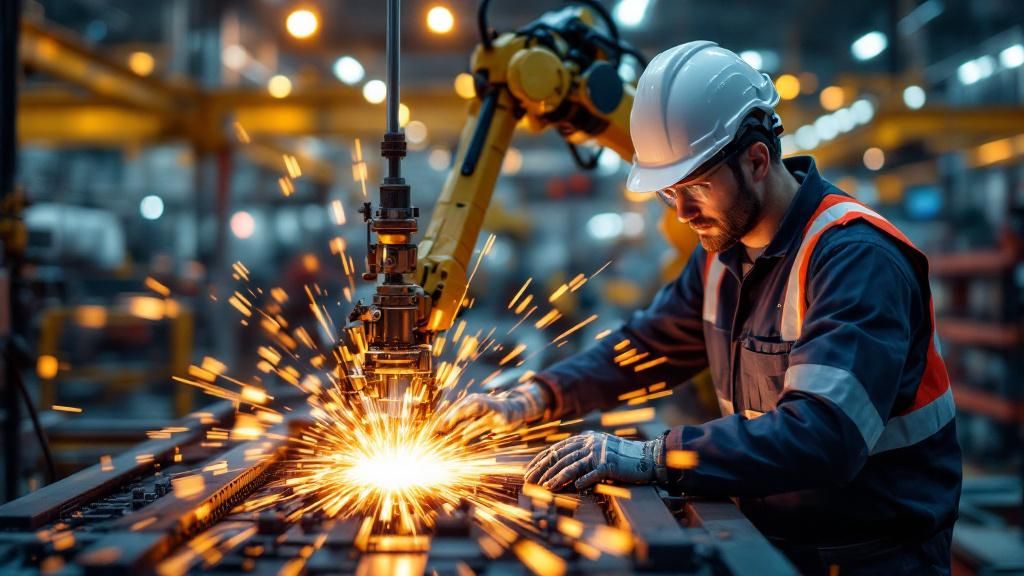
The UK manufacturing landscape is witnessing an unprecedented transformation as manufacturing executives commit record-breaking investments in cutting-edge automation technology and broad-based employee development schemes. This deliberate repositioning demonstrates manufacturers’ resolve to enhance productivity, sustain international competitiveness, and ensure sustainable growth. Our investigation reveals the major funding allocations propelling this sector overhaul, assesses the innovative technologies revolutionising factory floors, and investigates how companies are readying their staff for future requirements. Discover what this funding momentum means for the UK manufacturing sector’s future.
Growth Surge in Automation Technology
The UK production sector has seen an substantial financial dedication towards automation solutions, with spending hitting record highs in recent times. Major manufacturers across automotive, aerospace, and electronics markets are allocating substantial capital towards robotic systems, artificial intelligence, and advanced manufacturing solutions. This investment surge reflects industry confidence in automation’s potential to improve production efficiency, cut production expenditure, and raise quality benchmarks. The extent of this investment highlights manufacturers’ recognition that technological advancement is essential for preserving market competitiveness in an ever more globalised marketplace.
Industry specialists attribute this funding surge to several converging factors, such as post-pandemic distribution network evaluation, increasing employment expenditure, and the critical requirement for improved operational responsiveness. Companies are focusing on automation technologies that provide adaptability and growth capacity, facilitating swift adjustment to fluctuating market demands. Investment figures reveal that manufacturers are doing far more than updating manual procedures but radically transforming production methodologies. This planned method guarantees that British manufacturing remains at the vanguard of manufacturing advancement, placing the sector for sustainable growth and enhanced resilience against forthcoming financial volatility.
Strategic Workforce Development Initiatives
Acknowledging that technological advancement alone cannot drive success, UK manufacturers are committing significant resources in extensive employee training initiatives. These initiatives represent a significant change in how the industry invests in human capital. By pairing automation deployment with rigorous upskilling initiatives, manufacturers are confirming their workforce can effectively operate, maintain, and optimise new technologies. This holistic approach tackles capability shortfalls whilst enhancing worker confidence and involvement in an progressively technology-driven environment.
Professional Development Programmes
Leading suppliers have established bespoke training academies and apprenticeship programmes designed to equip workers with critical digital and technical skills. These programmes cover robotics operation, data analysis, information security, and advanced programming languages. Investment in classroom-based and digital learning solutions provides accessibility across all staff categories. Companies are working alongside educational partners to offer credentials acknowledged industry-wide, boosting career progression opportunities and staff retention levels considerably.
The financial commitment to workforce development extends beyond onboarding phase, with companies establishing continuous professional development initiatives. Workers benefit from consistent training prospects to respond to advancing digital environments and new sector standards. Many companies offer training subsidies, mentorship programmes, and educational sabbaticals for additional study. This ongoing commitment demonstrates manufacturers’ focus on creating long-term career pathways and cultivating a ethos of continuous development throughout their organisations.
Partnership with Academic Organisations
UK producers are establishing collaborative relationships with universities and further education colleges to align curriculum development with sector needs. These partnerships ensure graduates possess practical skills directly relevant to modern manufacturing environments. Joint ventures include course development, visiting lectures, laboratory access, and resource supply. By engaging directly with educational institutions, manufacturers shape the flow of talent entering the sector, addressing anticipated skills shortages proactively.
Additionally, manufacturers support research projects and innovation centres within universities, promoting knowledge sharing and technological development. Combined-degree programmes and industry placements offer students with crucial practical experience whilst providing companies first access to new talent. These working relationships strengthen the UK’s position as a worldwide manufacturing centre, guaranteeing ongoing competitiveness and positioning Britain as an desirable location for high-tech manufacturing investment and skilled workforce development.
Economic Impact and Prospects Ahead
The record investment in automation and skills training is forecast to create significant financial gains across the UK manufacturing landscape. Industry analysts anticipate output increases of up to 25% within the next three years, resulting in greater output and enhanced competitiveness in worldwide markets. These developments are anticipated to create approximately 15,000 new skilled jobs in manufacturing whilst strengthening Britain’s standing as a technology-driven industrial hub. The cascading impact of this funding will likely drive expansion throughout distribution networks and allied industries.
Long-term forecasts for UK manufacturing appear growing more positive as businesses establish themselves at the forefront of Industry 4.0 adoption. Companies committing to automation today are preparing themselves to unlock emerging market opportunities and react quickly to shifting market requirements. The integration of artificial intelligence, robotics, and cutting-edge analytics promises to unlock innovation potential formerly limited by labour availability and operational constraints. Progressive manufacturers recognise that sustained competitiveness depends upon continuous technological advancement and employee skill enhancement.
Looking ahead, the drive created through present investment movements indicates a fundamental reshaping of UK manufacturing’s economic role. State backing through workforce development funding and business incentives will likely speed up adoption among SMEs. As automation develops and workforce skills grow, British manufacturers are set to reclaim market share from overseas competitors. This shift constitutes not merely industrial modernization but a strategic repositioning of the manufacturing sector as a pillar of the UK’s future economic prosperity and technology leadership.
